01The Multi-Tiered Geometry of Circular Vectors
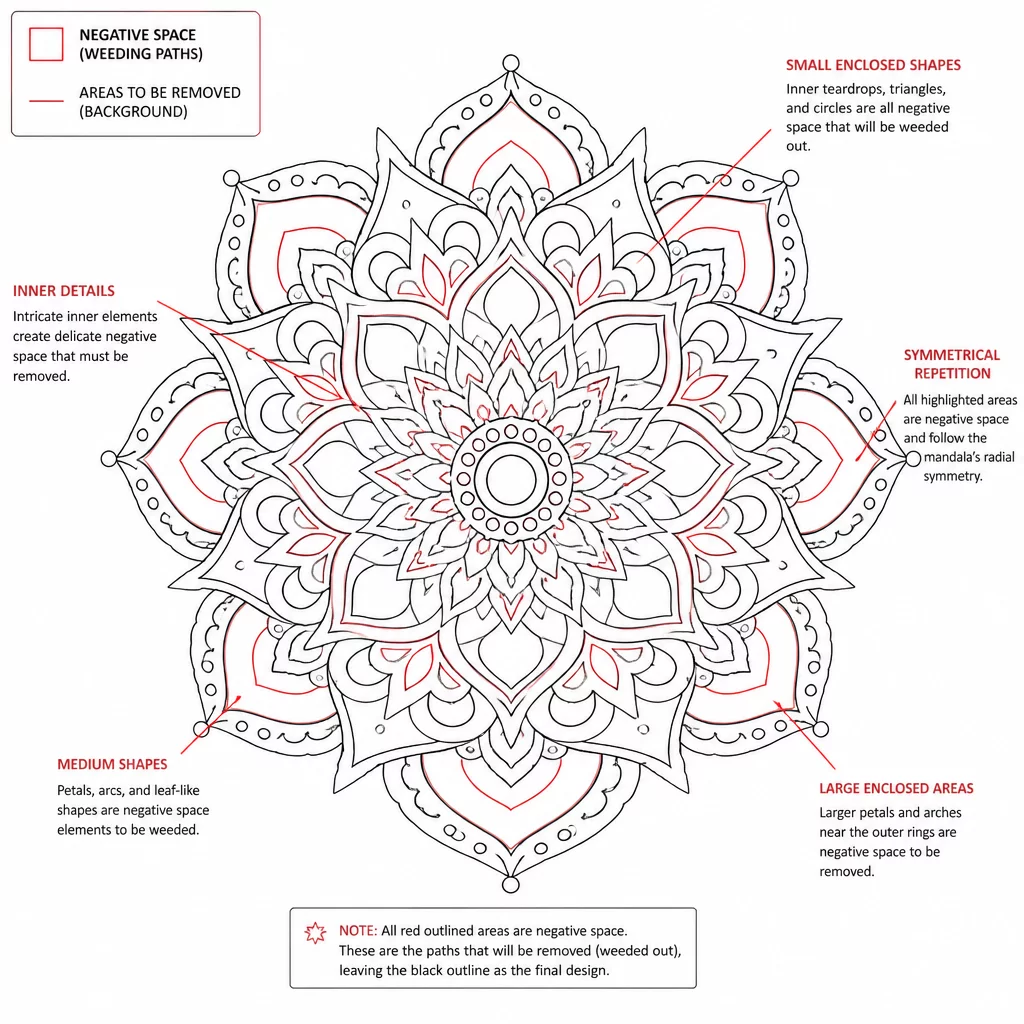
Mandala artwork represents one of the most deceptively intricate challenges in precision blade cutting. When designers create ornate radial symmetry on screen, strokes appear balanced and fluid, yet every visual intersection conceals an underlying topological structure that the plotter blade must physically trace and sever.
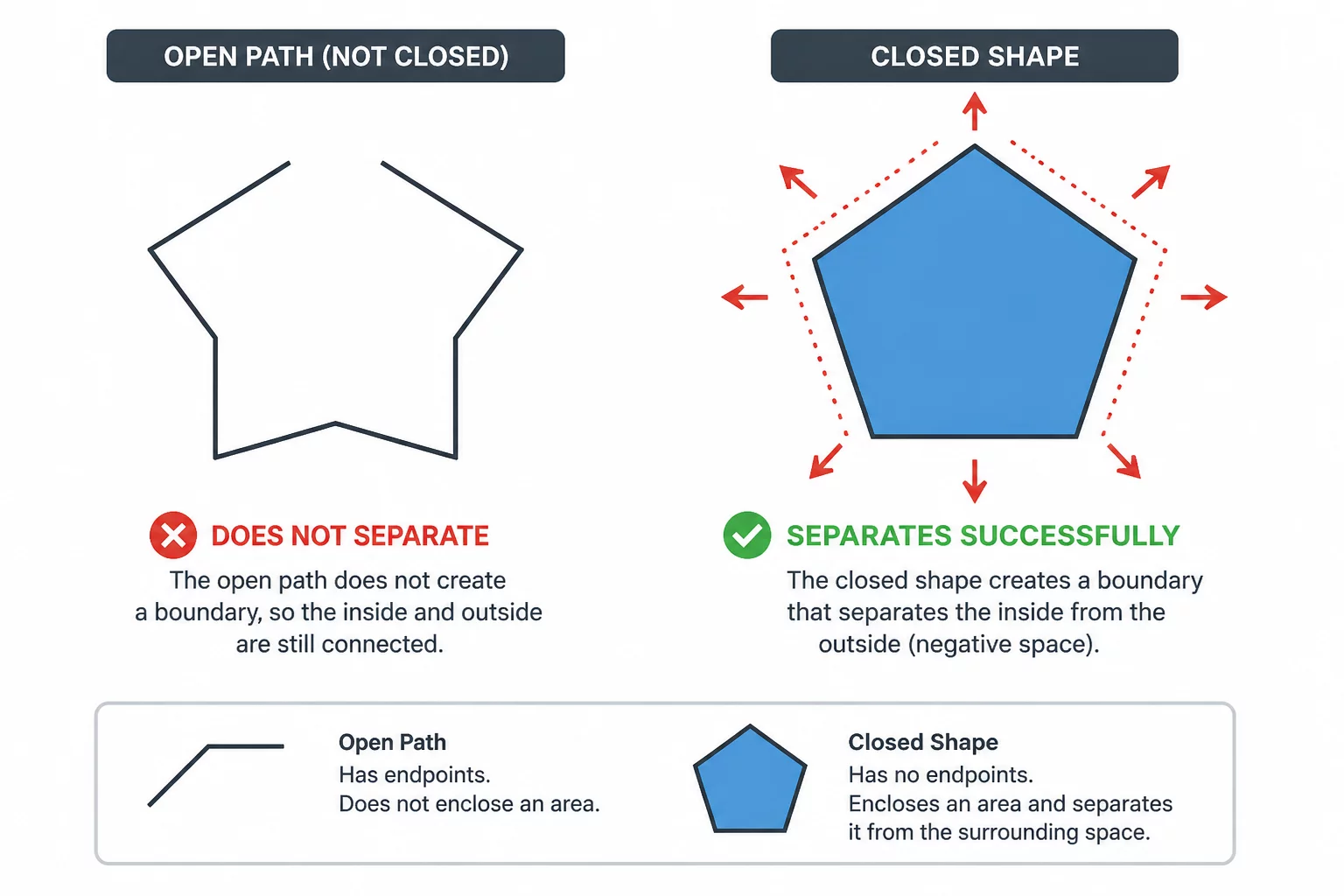
A standard 8-axis mandala typically houses hundreds of closed sub-paths nested in concentric tiers. Unless compound paths are correctly established, the software struggles to calculate which sections belong to the positive body and which represent negative voids. This confusion leads to accidental micro-slits or complete separation of critical bridge networks during initial blade passes.
Key Takeaways
- Every closed petal must function as a distinct sub-path within a single compound entity to avoid perimeter shearing.
- Weeding paths require a minimum 0.8 mm physical clearance between adjacent cuts to prevent vinyl lifting off the carrier mat.
- Tangential radial intersections must be welded flat rather than stacked as overlapping independent strokes.
02Identifying Trapped Islands vs Continuous Channels
Weeding failures can involve both geometry and material conditions. One geometry-related failure occurs when negative spaces form trapped islands with nowhere for scrap vinyl to peel cleanly away in a single uniform pull.
"A cut file is only as good as its release path. If an operator cannot hook the waste material from center to rim without tearing tiny nodes, the vector geometry has failed the manufacturing test."
When reviewing mandala rings, separate the perimeter channels into concentric release zones. Outer petals should provide continuous relief channels that allow excess material to strip away radially, while internal geometric florets must retain sufficient wall thickness so fine details stay glued to the carrier backing.
03Optimizing Kerf Clearance on Radial Intersections
Physical drag knives rotate on a mechanical pivot point, creating a slight kerf footprint that differs substantially from a theoretical mathematical line. When vector points converge into acute angles smaller than 15 degrees, the blade tip creates micro-tears in the backing film.
- Radius sharp internal corners to at least 0.15 mm to eliminate blade chatter and snagging during fast cornering.
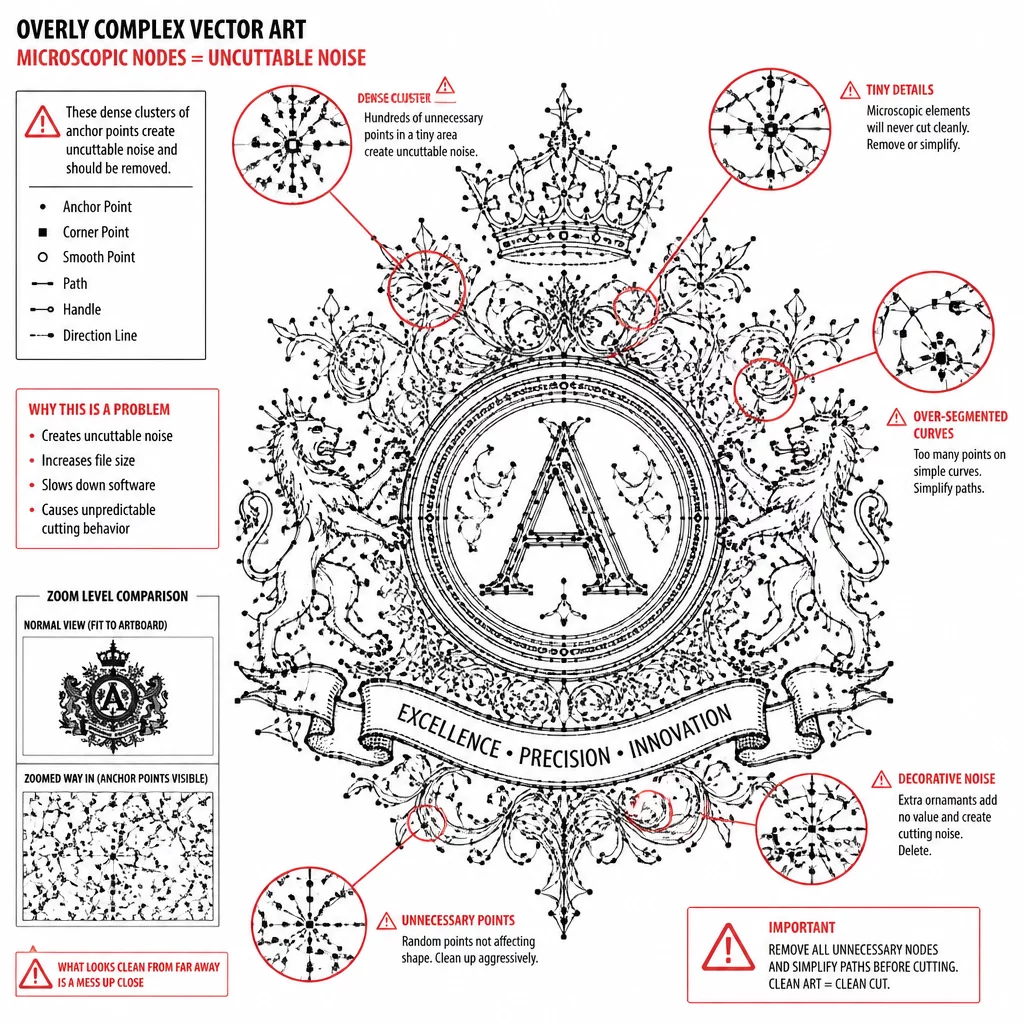
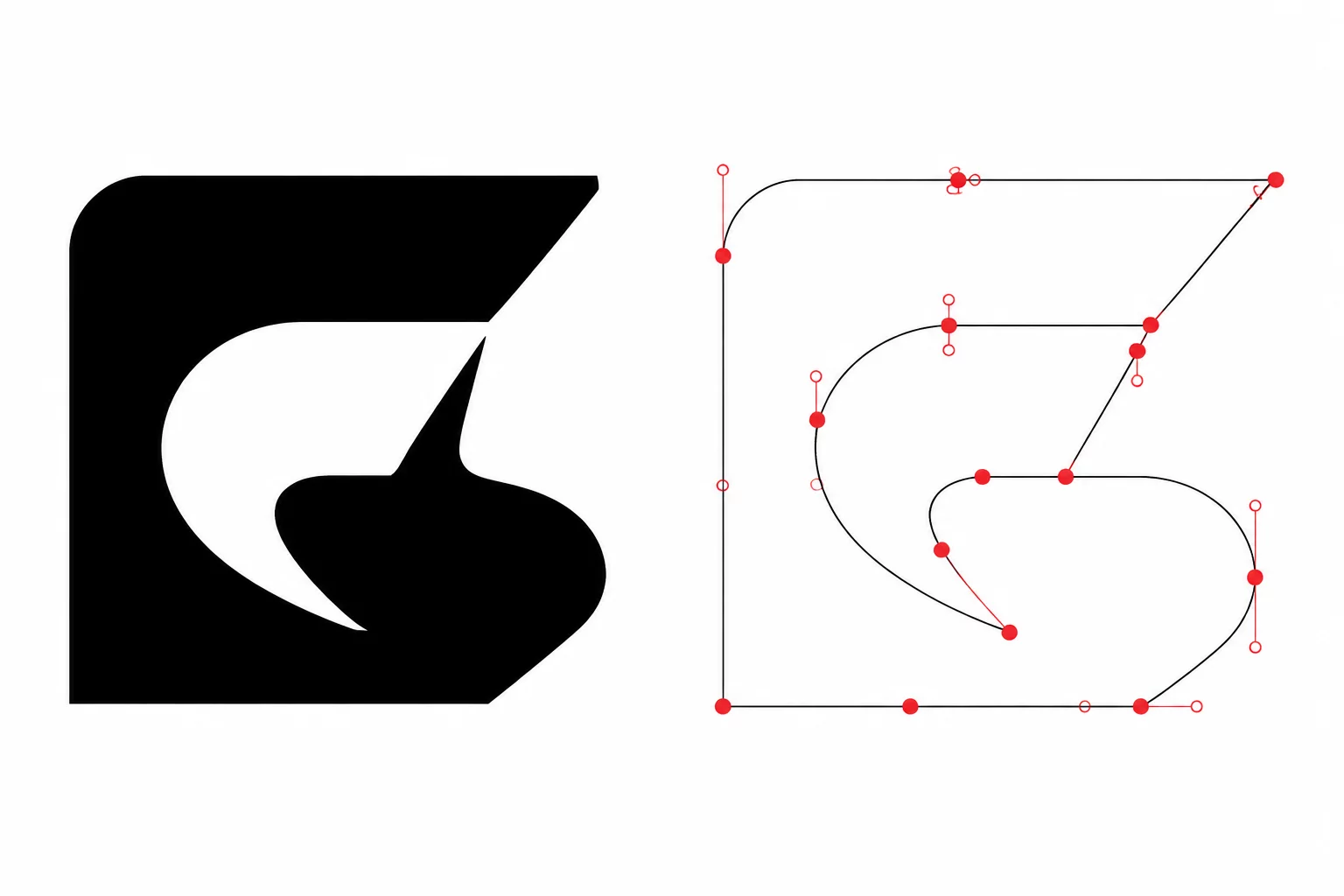
- Eliminate redundant intermediate anchor points along symmetrical Bézier curves to stabilize plotter head acceleration.
- Group concentric rings into dedicated cutting order hierarchies, processing inner negative cutouts before outer silhouette perimeters.
By establishing this geometric discipline before sending the file to production, complex ornamental mandalas transform from frustrating weeding puzzles into rapid, satisfying, and ultra-clean cuts.
04Execution Checklist for High-Density Mandala Cuts
Before executing final production runs on specialty vinyl, cardstock, or stencil films, run a complete path topology check in wireframe mode. Confirm that no stray single-node paths lurk in the center hub and that all radial duplications share a unified center coordinate.
Check your software cut preview with fill attributes disabled. If red cutlines show double concentric borders around fine lace segments, execute a boolean union or contour offset immediately. A clean mandala cut file should contain exactly one cut line per decorative border.