01Continuous Boundary and Material Release
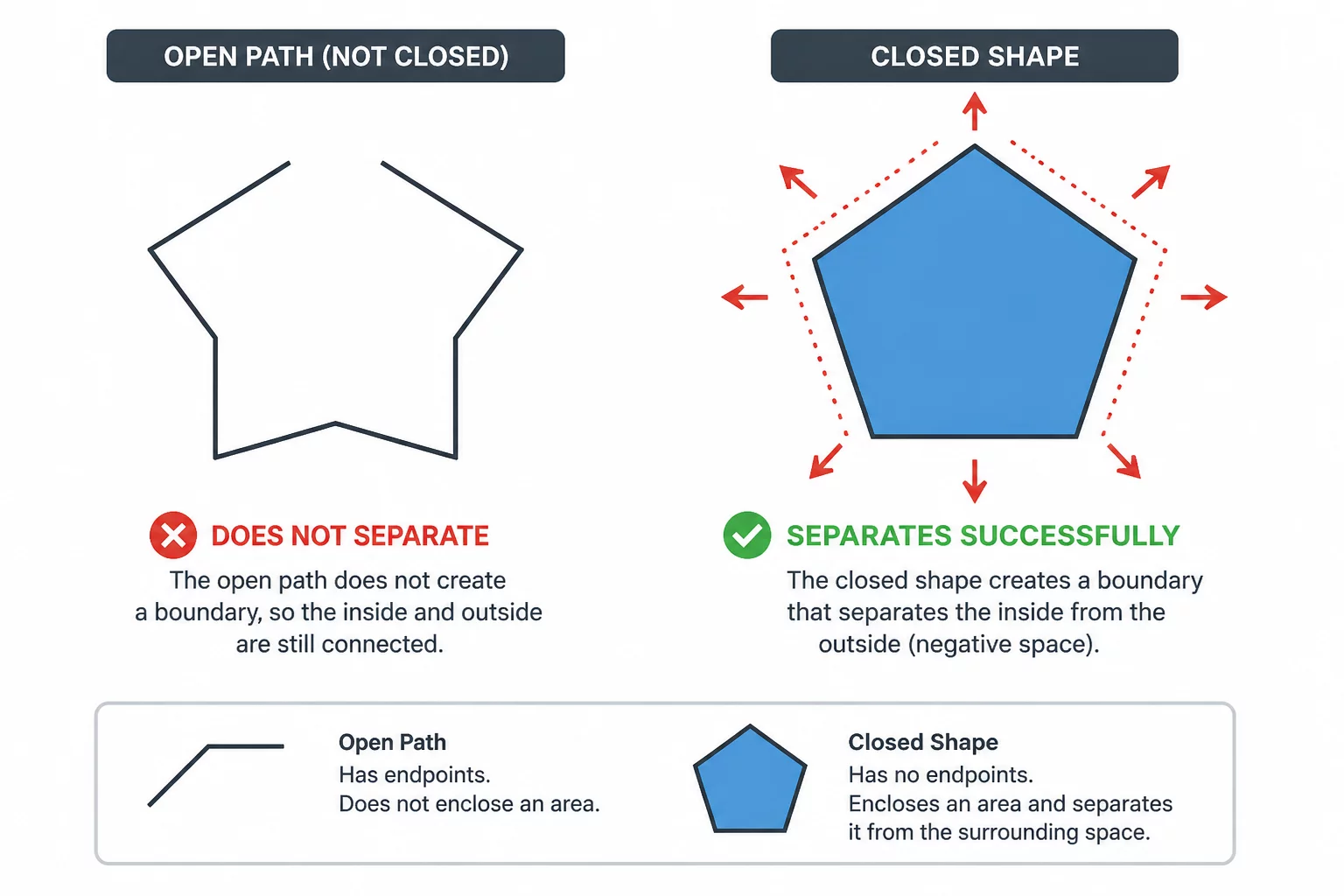
In cutting software, a closed shape represents an unbroken vector loop where the start point and endpoint coincide at identical spatial coordinates. This geometric continuity allows the cutting plotter blade to trace the full perimeter without lifting, cleanly separating the internal material from the surrounding sheet in one fluid movement.
An open path terminates at disconnected endpoints, leaving the shape physically tethered to the scrap backing. When peeling away excess material during weeding, open contours tear the backing layer and distort fine letterforms because no isolated island of negative space was ever established by the blade path.
Key Takeaways
- Closed paths produce clean physical dropouts and eliminate tedious manual trimming during vinyl weeding.
- Open vectors fail to generate internal boolean subtractions and corrupt automatic offset calculations.
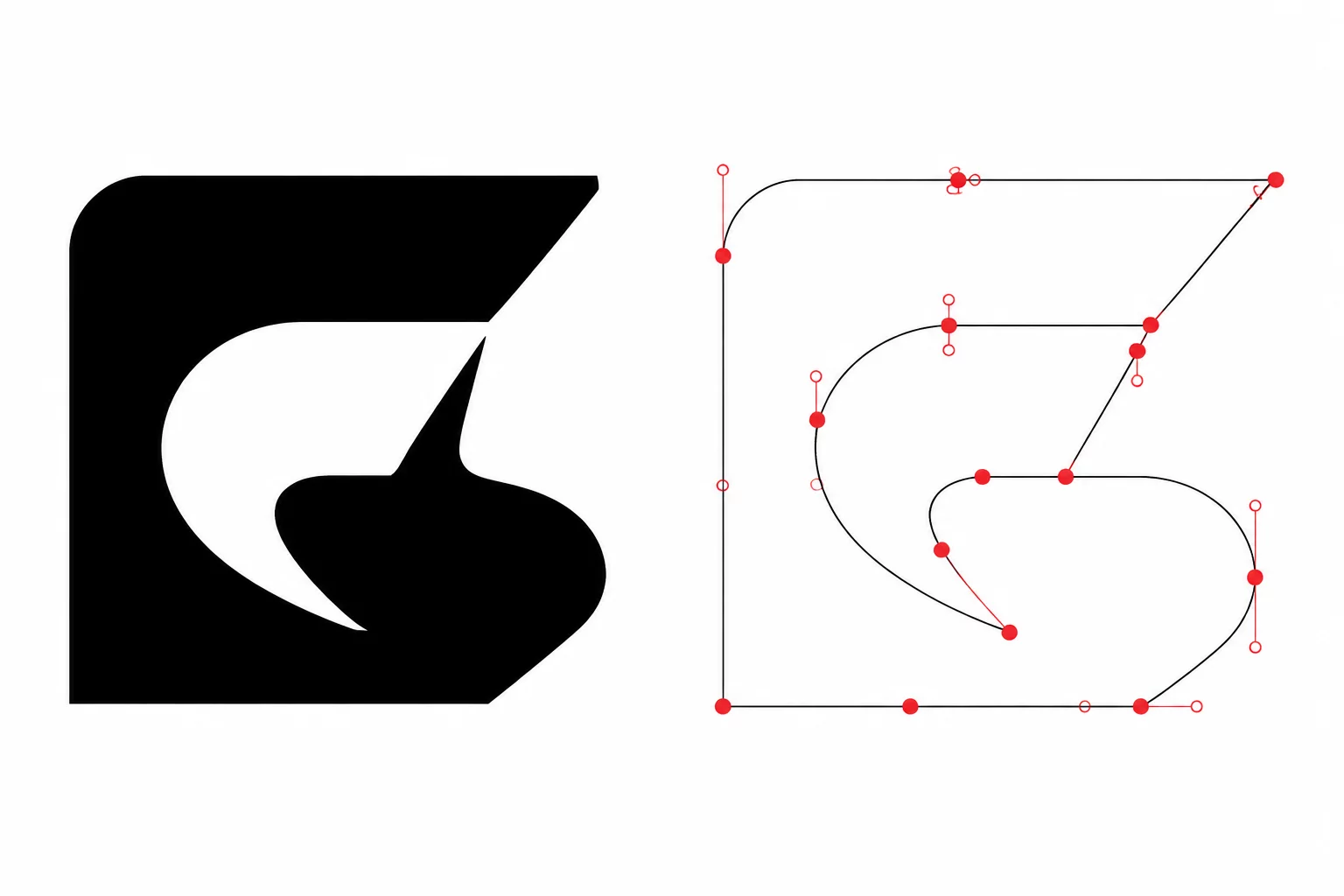
- Node snapping at curve intersections prevents machine stutter and unsightly blade gouges.
02Tool Travel and Blade Lift Optimization
Cutter firmware treats closed loops as single travel commands. The machine positions the tool head, plunges the swivel blade, tracks around the perimeter contour, and applies a tiny overcut to close the cut seam cleanly before retracting the holder.
A vector path is not a true cutout shape until its starting node and terminal node share an exact geometric closure.
Broken or unjoined paths force the plotter carriage to execute redundant plunges and blade lifts for every tiny segment. This unnecessary motion drastically extends execution time, causes mechanical blade wear, and leaves jagged transition marks at every unclosed gap.
03Directional Offset and Inset Boundaries
Offset algorithms depend on clear topological orientation. With closed shapes, software can instantly determine inside from outside, permitting precise outward expansion for sticker borders or inward shrinking for tight multi-layer inlays.
- Exterior offsets create uniform protective bleed margins around the entire silhouette.
- Interior inlays contract symmetrically without collapsing acute inward angles.
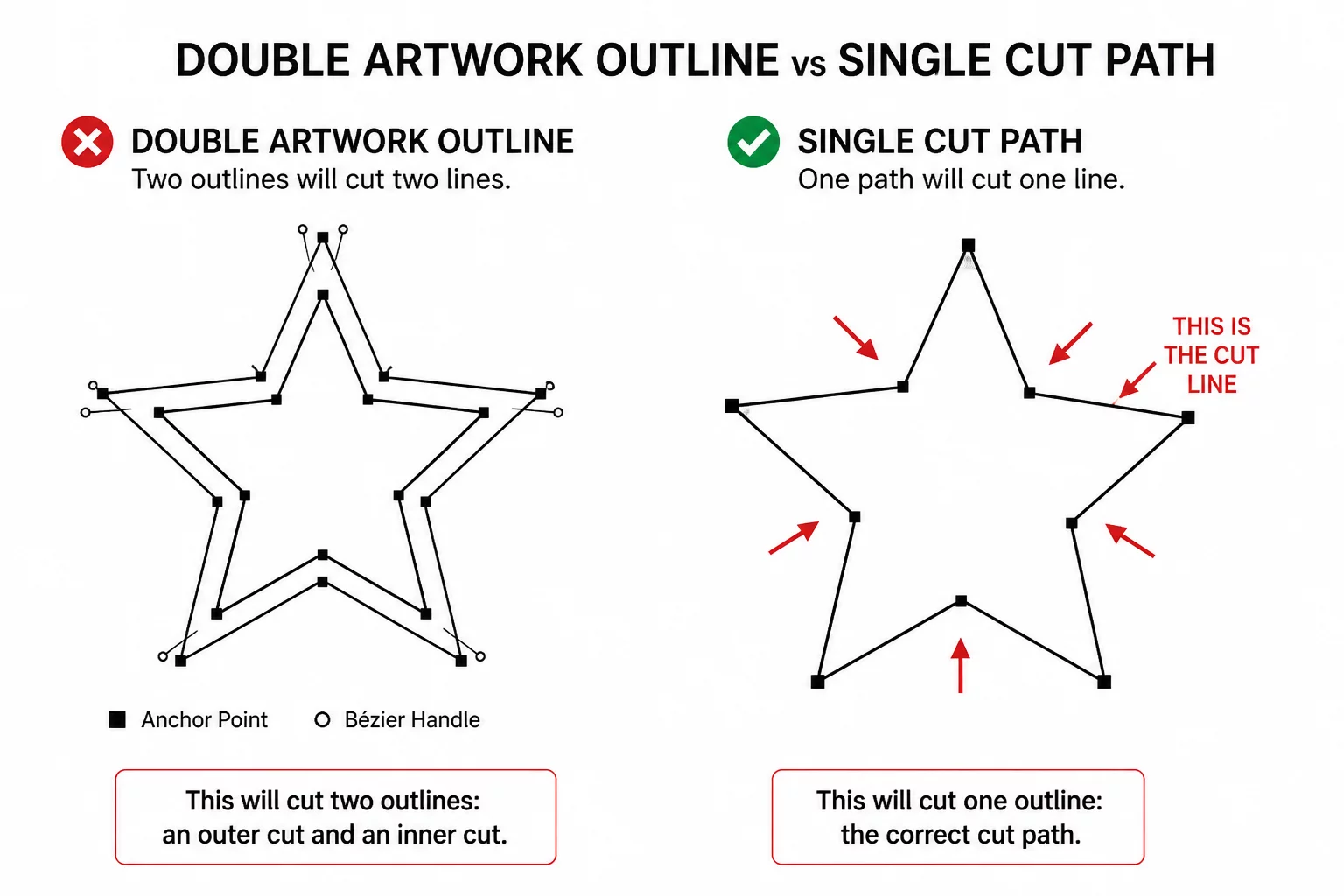
- Open paths expand into double-line parallel strokes rather than directional boundaries.
Applying an offset to an open curve generates parallel outlines around the line stroke rather than an expanded perimeter. This unexpected doubling of cut lines causes double cuts and shreds delicate vinyl media.
04Diagnosing False Closures in Design Files
Standard illustration applications often mask open vector paths by rendering color fills between unconnected endpoints. While the artwork appears completely solid on screen, the underlying cut geometry remains broken, causing the cutting machine to ignore the invisible closure line.
Switching to outline wireframe view or inspecting node structures reveals unjoined points immediately. For an intended closed outline, join the matching open endpoints and verify closure in node view. Welding filled shapes is a separate operation. Test the resulting contour at its final size.